
RAINFOREST TUBING
ADDITIONAL INFORMATION
ON THIS PAGE
1. BEFORE THE TOUR
2. ON THE BUS
3. THINGS TO SEE ON THE BUS
4. AT THE RIVER
5. AFTER THE TOUR
BEFORE THE TOUR
Pick-up Information
- A bus will collect you from the pick-up location listed on your booking.
- Please allow up to 10 minutes after your scheduled time in case of traffic or unexpected delays.
- Make sure we have your best contact information and preferred communication method (e.g., SMS, WhatsApp, email).
ON THE BUS
Waiver
Each guest must complete a separate waiver. It is best if you complete this before the tour using the link.
Optional Hire & Purchases
You may hire or purchase the following from our host on the bus, or you can arrange these with our team before your trip:
- Shoes – $5 per person
You may bring your own, but they must have a back strap and will get wet. - Sunglasses straps
Recommended if you wear glasses or sunglasses. - Waterproof phone cases – $15 each
If you bring your phone on the river, it is at your own risk.
THINGS TO SEE
DURING THE DRIVE
As you travel toward the rainforest and the Little Mulgrave River, you’ll pass through one of the most remarkable natural landscapes on Earth — the Wet Tropics World Heritage Area. This region is home to ancient rainforests, fast‑flowing rivers, deep gorges, and dramatic mountains, and holds one of the oldest and most biologically diverse rainforest systems on the planet. It stretches nearly 900,000 hectares, forming a rare meeting point between rainforest and reef, and contains plant lineages dating back over 140 million years.
The Little Mulgrave River
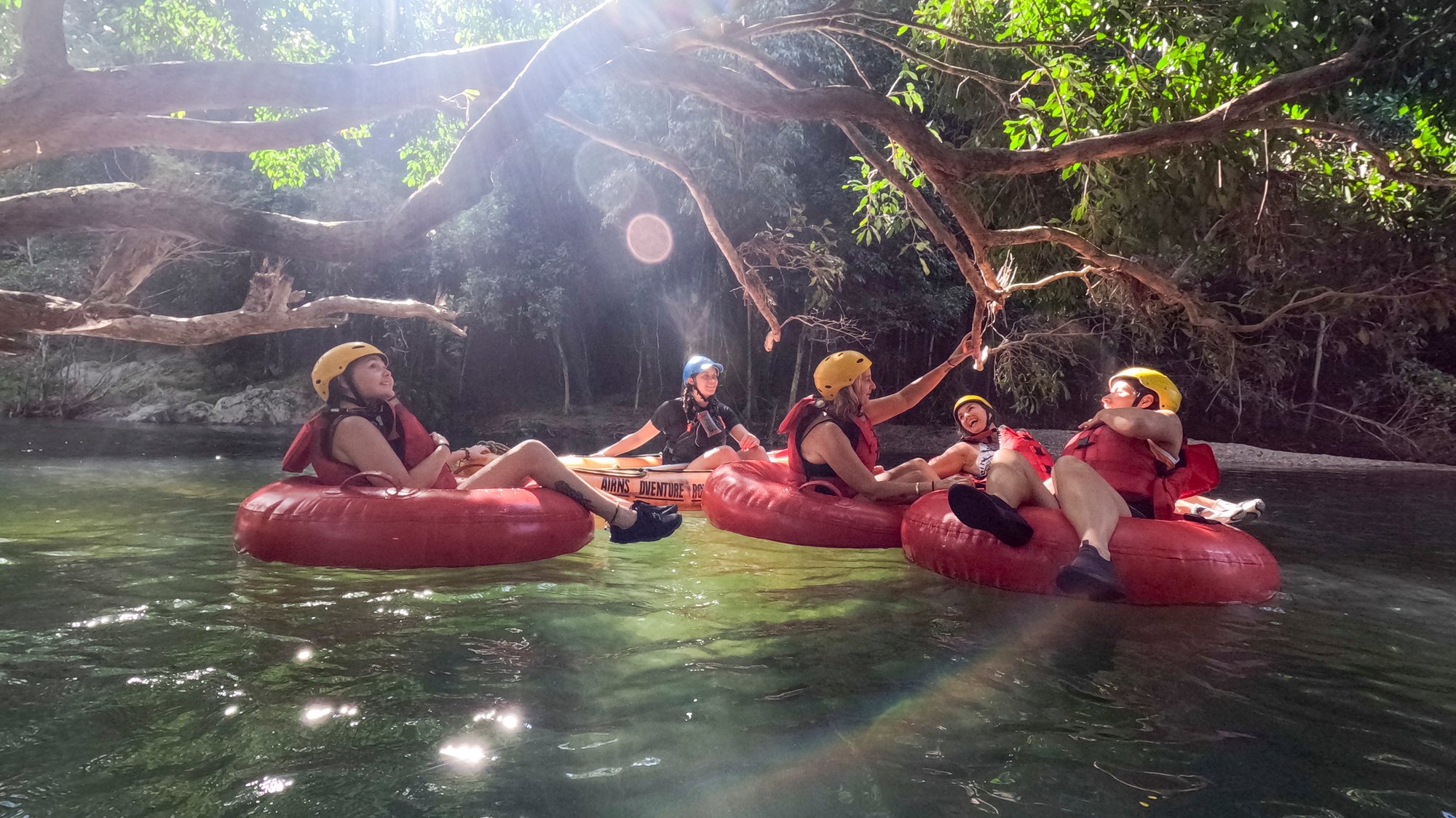
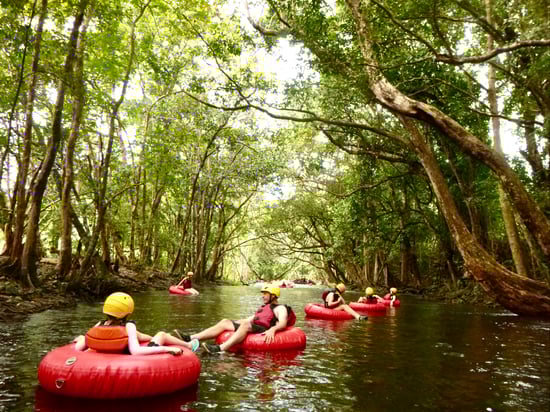
Your Rainforest Tubing experience takes place on the Little Mulgrave River, a gentle and scenic branch of the larger Mulgrave River system. This area lies on the edge of the Wet Tropics and flows through lush rainforest valleys fed by Queensland’s highest mountains — Bartle Frere and Bellenden Ker. The Little Mulgrave is known for being shallow, cool, and picturesque, offering safe, calm conditions ideal for tubing.
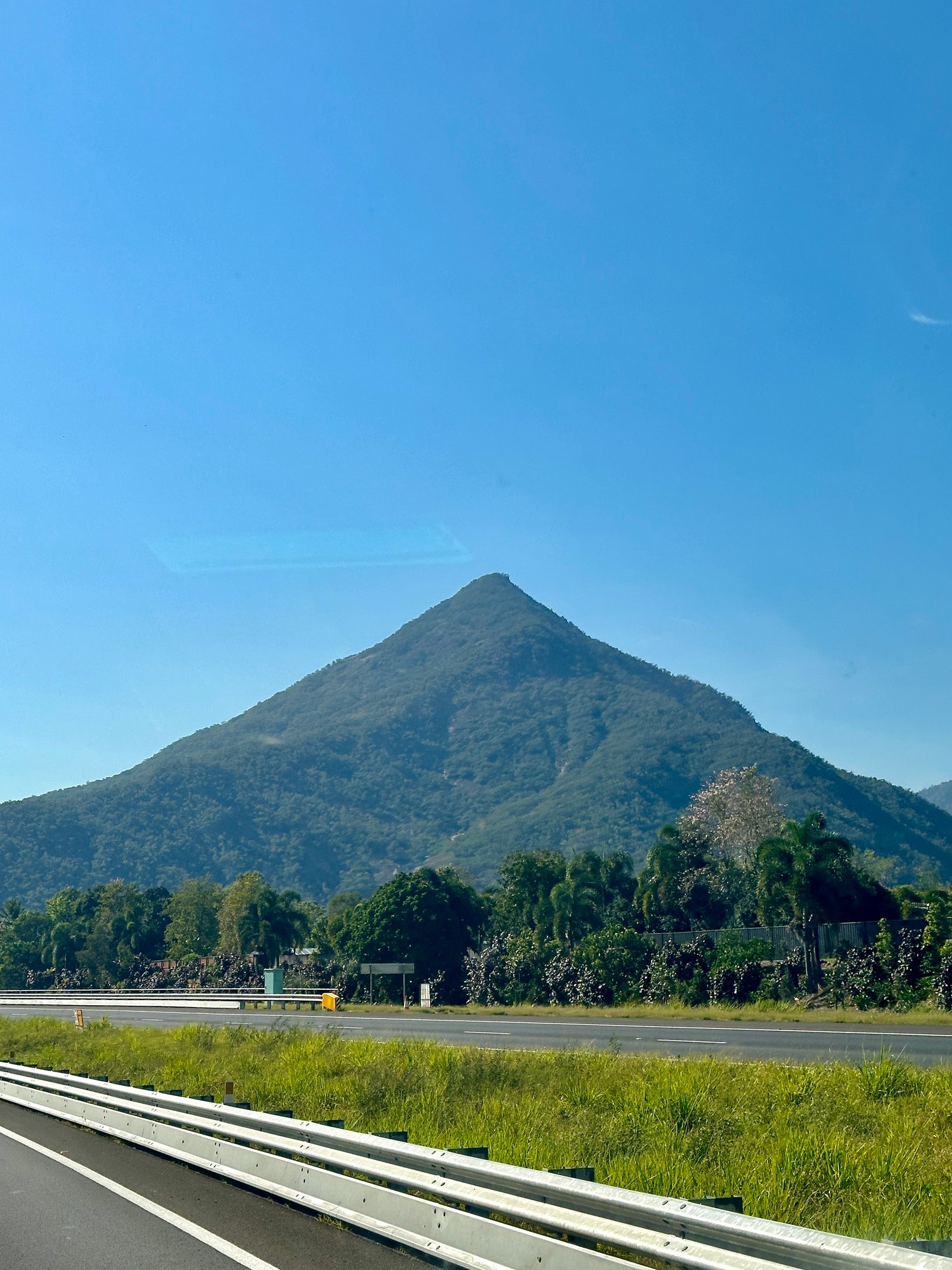
Walshs Pyramid - A Landmark Rising from the Rainforest
As the bus heads south, you’ll see Walshs Pyramid towering above the landscape. This striking mountain stands 922 metres high and is the world’s largest freestanding natural pyramid. Located within the Wooroonooran National Park, it forms part of the Wet Tropics region.
Its near‑perfect pyramid shape was sculpted over millions of years as softer rock eroded away, leaving behind a dramatic granite peak. Each August, ultra‑fit competitors race from the township of Gordonvale to the summit and back — a tradition that has become a beloved local spectacle.
Even from the bus, its presence feels impressive — a sharp, green peak rising from a patchwork of rainforest, cane fields, and mountain foothills.
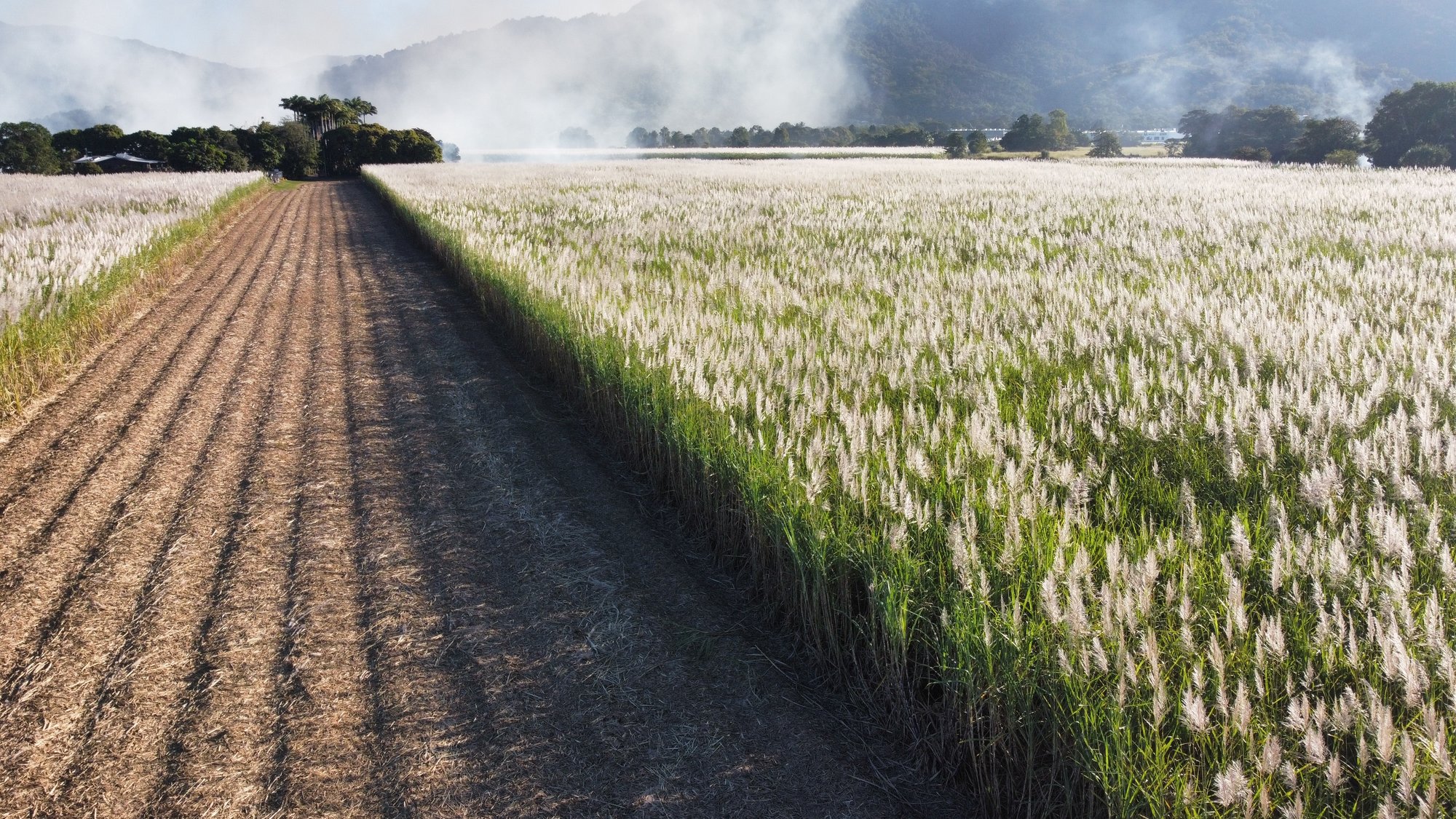
Sugar Cane – A Defining Crop of Far North Queensland
As you pass through Gordonvale and the surrounding region, you’ll notice fields of sugar cane stretching toward the mountains. Sugar cane has shaped life in Far North Queensland for over a century and is one of the region’s largest agricultural industries.
Queensland produces around 96% of Australia’s sugar cane, with much of the crop harvested in this very region. The cane flowers in May–June, followed by harvest season from July–November. A significant portion of Australia’s raw sugar — more than 80% — is exported, making cane farming an important economic driver for local communities.
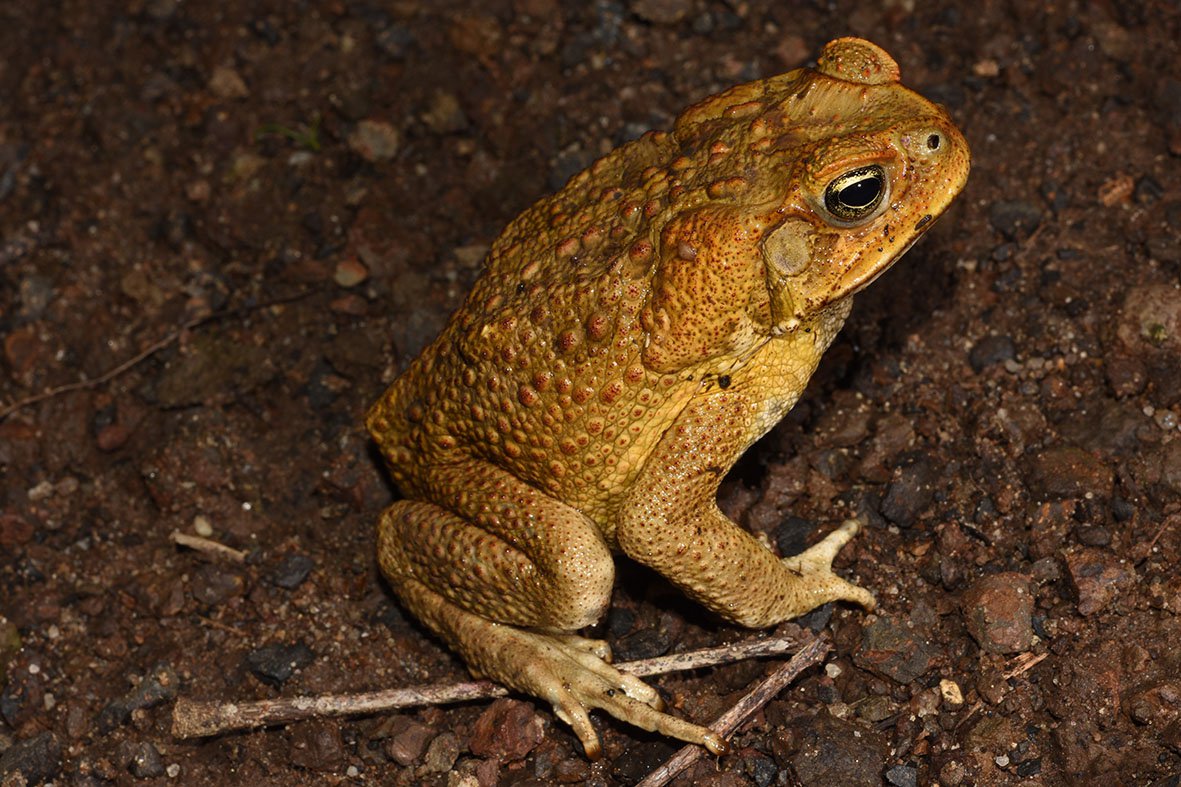
Cane Toads – An Unexpected Chapter in Queensland History
As you travel through the cane‑growing region, you may come across information about cane toads — one of Australia’s most well‑known invasive species.
Cane toads were introduced to Queensland in 1935 in an attempt to control beetles that were damaging sugar cane crops. Scientists hoped the toads would eat the beetles, but the plan did not work. The beetles lived high on the cane plants, while the toads stayed on the ground, so the two rarely interacted. As a result, the beetles continued to thrive, and the cane toads spread rapidly across northern Australia, causing harm to native wildlife and local ecosystems.
Today, cane toads are a common sight in many parts of northern Queensland, and their story is often shared as a reminder of the importance of maintaining ecological balance.
NEED MORE HELP?
We're here to support you. For any extra information or accessibility needs, please email: info@cairnsadventuregroup.com.au
ACKNOWLEDGEMENT OF COUNTRY
We acknowledge the Traditional Owners of the land and waters we visit as part of our Rainforest Tubing experience. We pay our respects to their Elders past and present, and recognise their deep and ongoing connection to Country, culture, and community.
We honour the stories, knowledge, and care that First Nations Peoples continue to share with us, and we are grateful to experience this beautiful part of the rainforest on their Country.